Brick-Club
The best form of therapy is the one that your child enjoys engaging in. That is why I could not pass up the opportunity to offer LEGO®-based Therapy as an option for children.
What is Brick Club?
Brick club is a LEGO®-based Therapy social development program for school-aged children, created by neuropsychologist, Daniel B. LeGoff.
Some children find it challenging to interact with peers during unstructured play, such as during school breaks, at the park, or at birthday parties. While originally designed as a social development therapy for children with autism spectrum disorder, LEGO®-Clubs around the world have since helped many children with social, communication and motor difficulties. Brick Club provides an activity-focused opportunity in a safe environment for children to practice a wide range of skills, including positive social communication, sharing, turn-taking, fine motor skills, and collaborative problem-solving. LEGO®-based Therapy provides a highly structured environment, with each child playing a specific role within the group. This can help children feel calm and relaxed as they are doing something they enjoy and know precisely what is expected of them.
What Happens During a Brick Club Session?
Each session includes a small group of children who work together to create LEGO® models.
During model building, roles are allocated to each member of the group. The roles include:
- The Engineers: The Engineers are responsible for reading and explaining the instructions to the rest of the group.
- The Suppliers: The Suppliers are responsible for finding the correct parts when they are needed and passing them to the Builder.
- The Builder: The builder is responsible for listening to the Engineer and placing the LEGO® bricks in the correct location.
- The Helper: The Helpers are responsible for giving assistance to the Engineer, Suppliers and Builder. The Helpers also make sure that everyone is working together as a team.
The roles are rotated throughout the session so that every child has an opportunity to practice their skills in each role.
Throughout the session, children are awarded points for practising their excellent social-communication skills. Their achievements are praised, and their creativity is always encouraged!
As the group builds their skills working together, the team can then choose to engage in free-style building. The focus of the freestyle building is collaborative problem solving and compromise, using all the skills learnt during the model building activity.
Psychology and Occupational Therapy Collaboration
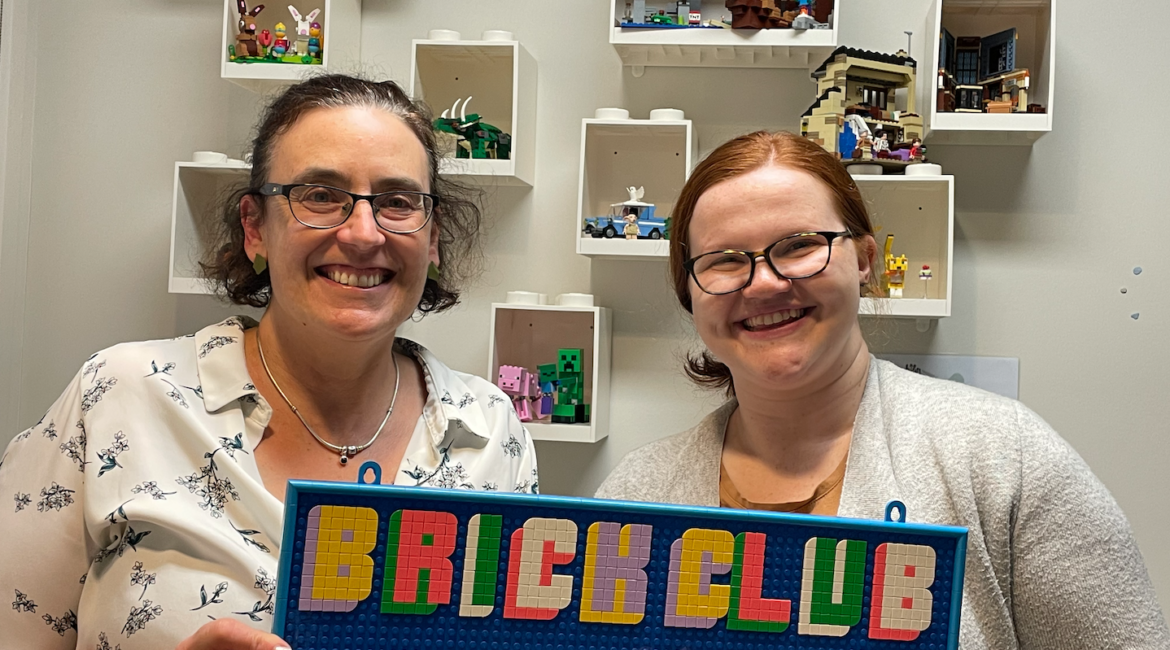
Brick Club is run in collaboration with MyOT! Therapy Services and Jade Goodman Psychology. Daniela’s OT lens brings expertise in whole brain-body development, including motor skills, sensory development, and social-emotional skills. Jade’s psychology perspective offers a deeper understanding of learning and brain development, behaviour and self-esteem, and emotion-focused regulation support.
Come join us!
If this is something your child might be interested in, please contact reception at 6153 3557 or info@myottherapy.com.au for further details.